Market and growth
Size, evolution, forecasts, channel shares, and category structure, with explicit sources, years, and geographies.
Our market intelligence connects industry analysis with your business decision. We research growth, segments, competitors, customers, and channels to evaluate market entry, expansion, a portfolio, or an investment.
View case studies ↗Categories, demand, growth, and channels under comparable definitions.
We look for information that changes a decision: enter or wait, invest in a category, prioritize a customer, or adjust the path.
We distinguish overall category growth from growth in the segments relevant to your decision.
We map participants, offerings, and positioning to identify defensible opportunities and their risks.
We compare needs, purchase pathways, and applications to identify the strongest fit.
We separate observed evidence, estimates, and gaps to define what to validate before investing.
We build the scope by module, based on your industry and business stage. Different decisions call for different research.
Size, evolution, forecasts, channel shares, and category structure, with explicit sources, years, and geographies.
We compare categories, subcategories, and applications without mixing incompatible market levels.
Participants, offerings, prices, capabilities, positioning, and visible market gaps.
Needs, behavior, purchase pathways, friction points, and relevant entry channels.
Technology, regulatory, and consumption signals that may change the market's attractiveness.
We bring evidence and limitations together to assess whether to enter, expand, invest, or redesign the proposition.
We start with the decision, rather than a generic table of contents.
We bring sources together and make definitions and comparability clear.
We separate facts, proxies, trends, and information gaps.
A report, database, and dashboard to explore the analysis with your team.
The report organizes the market analysis; the dashboard lets you explore findings through different questions.
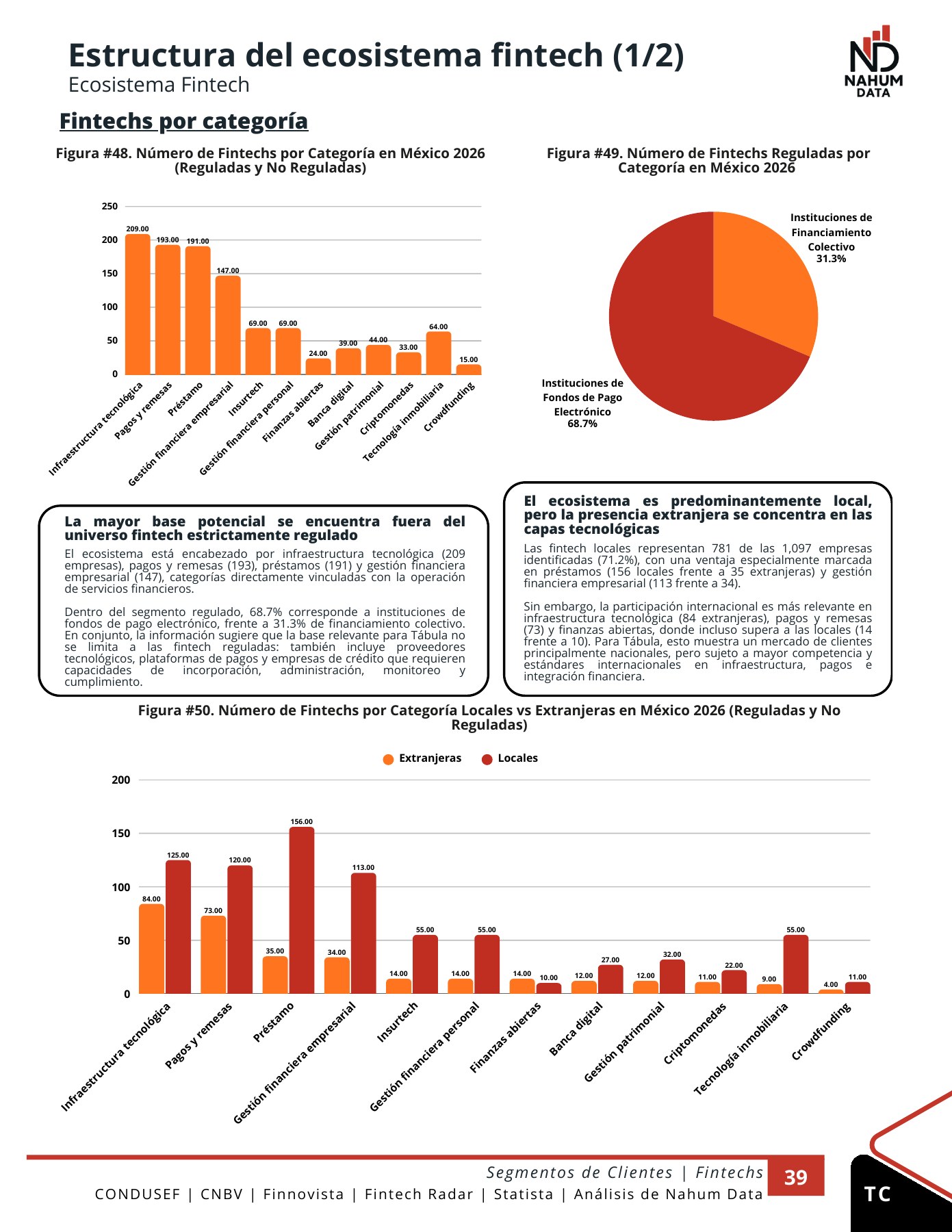
Categories, scale, and participant types are organized to reveal differences within the market.
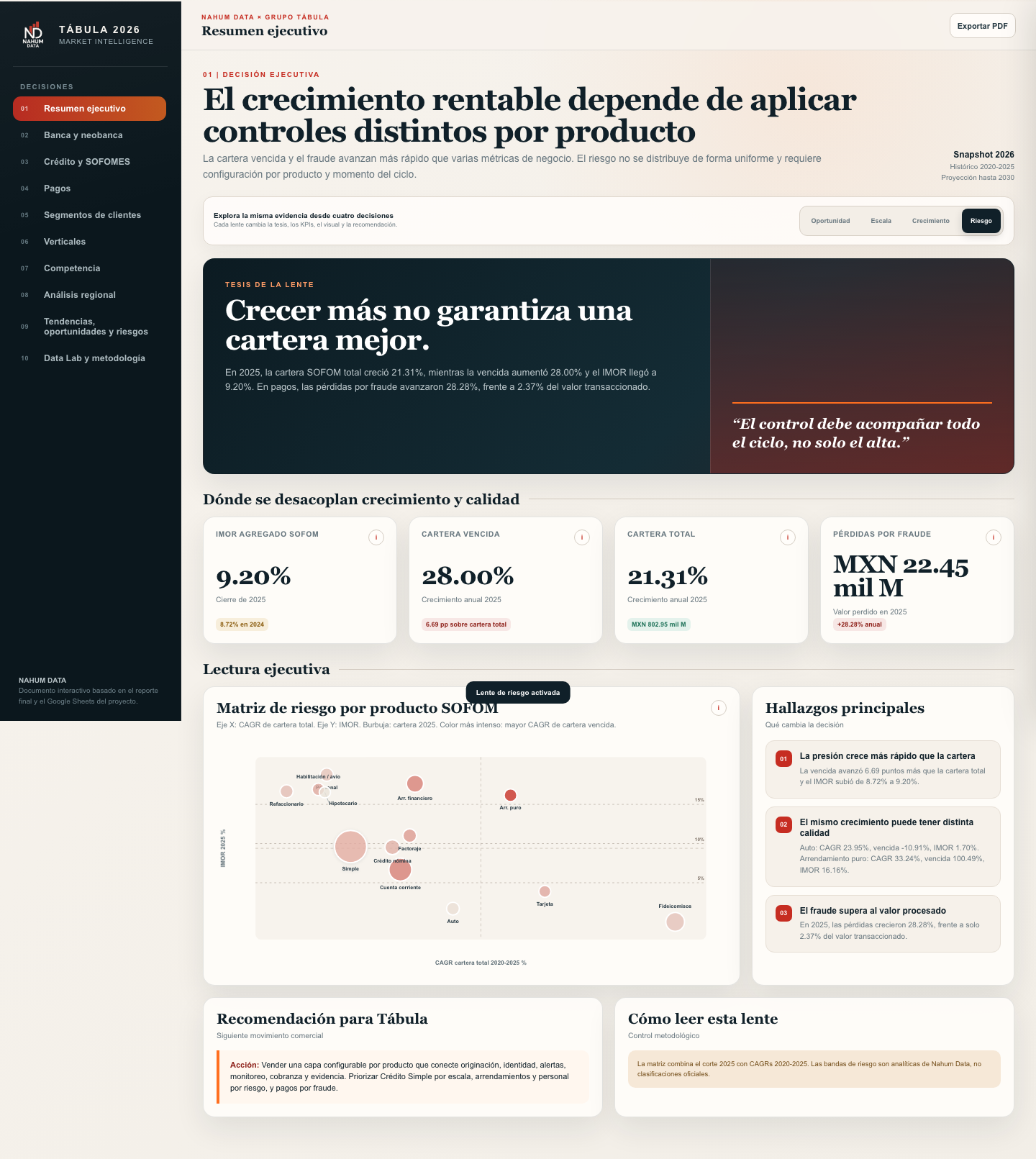
The tool lets you move from growth to risk and see how the interpretation changes.
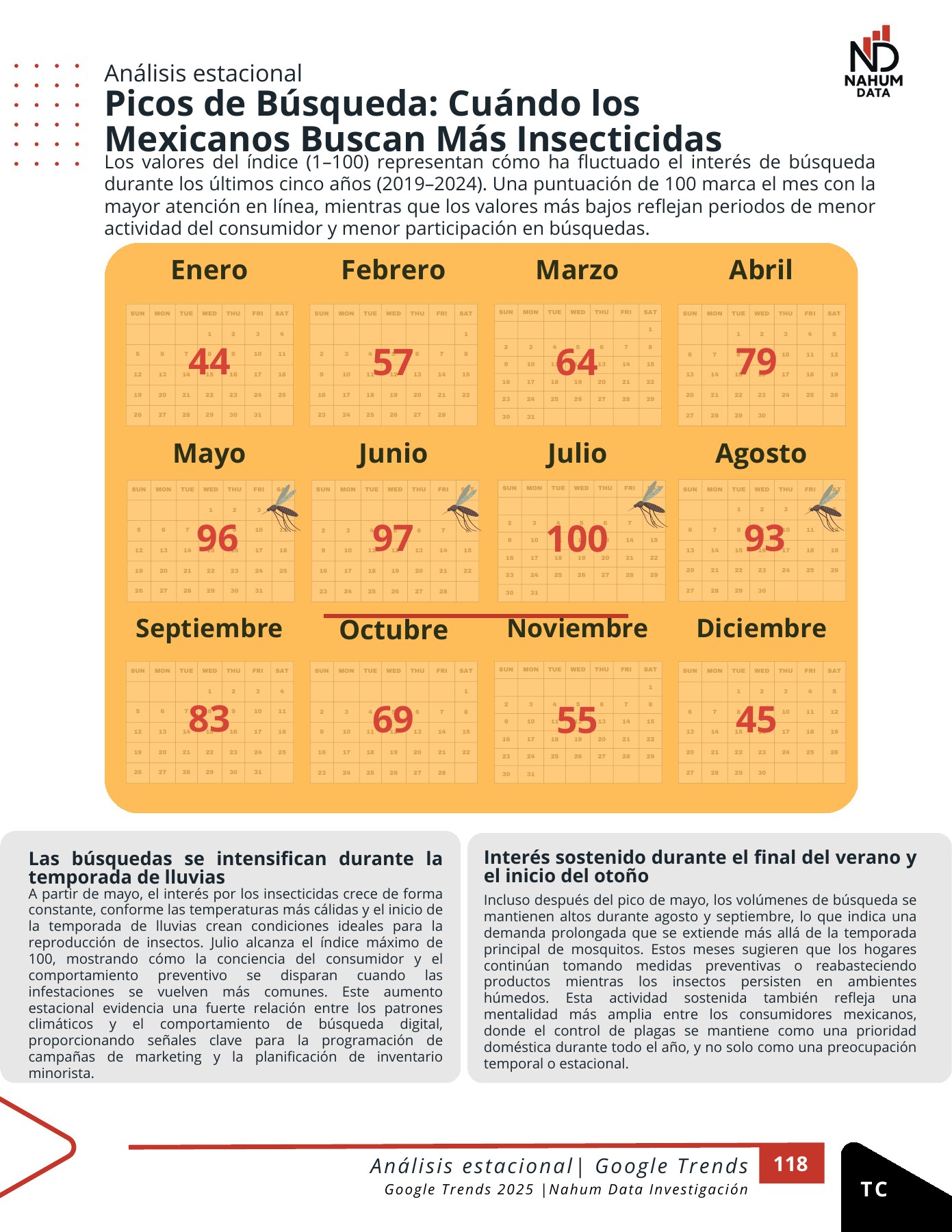
In our insecticide research, search signals are analyzed by region and month. They help formulate commercial questions; on their own, they do not represent sales or consumption.
Explore excerpts from the study ↗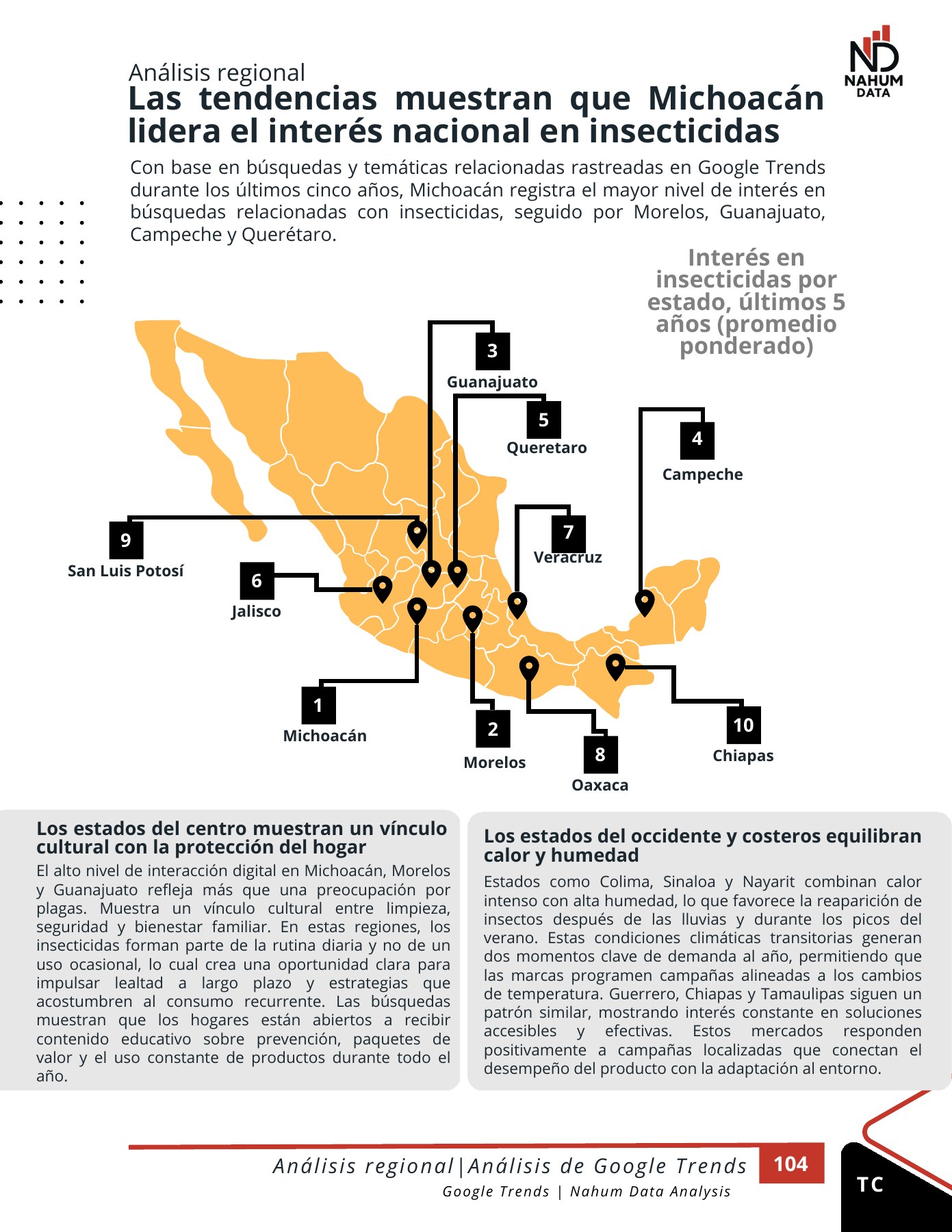
The study starts with a concrete decision. Together, we define the scope and the evidence it requires.
It helps you identify where to grow, which segments to prioritize, and how to compete. We analyze market size, its evolution, participants, and the trends reshaping the industry. We turn that information into concrete criteria to define your offering, evaluate expansion, and focus commercial resources.
We research who competes with you, what they sell, how they price, and how they position themselves. We compare products, services, prices, channels, value propositions, and capabilities relevant to your business. Depending on the scope, we incorporate mystery shopping to examine commercial offerings in depth. You receive a benchmark to identify differentiators and adjust your strategy using concrete references.
We work with licensed premium databases and cross-check that information with official statistics, industry reports, secondary-source research, and competitive analysis. We study size, growth, segments, consumers, channels, and trends based on your project. The result is an industry perspective that helps you evaluate opportunities, define priorities, and support your strategy.